

Pregnancy and motherhood have long been viewed as natural milestones in life. Yet, for many women today, the decision to have a child brings far more than excitement. It often comes with fear, uncertainty, and emotional pressure shaped by personal concerns, social expectations, online content, and real-world events.
Mental health professionals say these worries are becoming more common, and many women are struggling to separate realistic concerns from overwhelming anxiety.
As conversations around reproductive health continue to evolve, experts believe it is time to replace fear-driven narratives with balanced, fact-based discussions that help women make informed decisions without unnecessary panic.
Why Fear Around Pregnancy Is Common
Many women expect to feel nervous before becoming parents. According to Dr. Rubi Vaughn, a reproductive psychiatrist and director of the Division of Women’s Health at Montefiore Einstein in New York, feeling anxious about pregnancy, childbirth, and raising a child is completely normal because each represents a major life change.
The concern begins when those fears become so overwhelming that they prevent women from thinking clearly about whether motherhood is right for them. Mental health experts say many women are no longer questioning parenthood because they do not want children. Instead, they feel trapped by fear, information overload, and uncertainty about what pregnancy could involve.

Merle Bombardieri, MSW, LICSW, a parenthood decision-making coach with four decades of experience, explains that anxiety can make it difficult for women to even explore their true feelings about becoming mothers. According to Bombardieri, fear often overshadows personal desires, making the decision far more stressful than it needs to be.
A Different Reality Than Previous Generations
Experts believe the experience of deciding whether to have children has changed dramatically over the past decade. Women are now making this decision while facing concerns about reproductive rights, rising living expenses, political uncertainty, climate issues, and constant exposure to pregnancy-related content online.
Every day, social media platforms deliver advice, warnings, and personal stories covering every stage of pregnancy. One scroll can include hospital bag checklists, videos discussing rare pregnancy complications, posts about physical changes such as “pregnancy nose,” financial concerns linked to raising children, and emotional stories about difficult births.
Dr. Vaughn points out that anyone exposed to this volume of information would naturally experience some level of anxiety. While access to information has many benefits, endless exposure to worst-case scenarios can make pregnancy appear much more frightening than it is for most people.
When Pregnancy Anxiety Becomes Tokophobia
For some women, fear of pregnancy becomes much stronger than normal anxiety. Doctors call this condition tokophobia. It is an intense fear of pregnancy or childbirth.
Researchers still know relatively little about tokophobia in the United States. One reason is that maternal mental health received limited attention for many years. Dr. Zaneta Thayer, an associate professor of anthropology at Dartmouth College who studies maternal well-being, says the American College of Obstetricians and Gynecologists only began recommending routine screening for anxiety and depression during pregnancy within the past decade.
Global estimates suggest that about 14% of pregnant women experience tokophobia. A 2023 study led by Dr. Thayer reported much higher numbers during the COVID-19 pandemic. The study found that 62% of pregnant women in the United States reported symptoms linked to tokophobia.
The research focused only on women who were already pregnant during the pandemic. As a result, it does not reflect the entire population. Even so, Dr. Thayer believes pregnancy-related fear remains common among American women today.
Experts say people should not dismiss tokophobia as a personal weakness. Many pregnancy fears grow from social conditions rather than individual problems. As Dr. Thayer explains, much of the anxiety women experience comes from the world around them, not from pregnancy itself.
Society Plays a Bigger Role Than Many Realize
Concerns about pregnancy rarely exist in isolation. Economic pressures, healthcare access, political debates, and uncertainty about the future all shape how women think about becoming parents.
A recent Pew Research Center survey found that 38% of adults between ages 18 and 49 who do not plan to have children identified concerns about the state of the world as a major reason. Another 36% pointed to financial challenges, while 26% cited environmental concerns.
Mental health professionals say these findings reflect what they hear from patients every day. Many women worry about bringing children into a world marked by political division, rising costs of living, international conflicts, and climate-related uncertainty.
These concerns often exist alongside deeply personal questions about balancing careers, relationships, finances, and individual identity after becoming parents.
Reproductive Healthcare Adds Another Layer of Stress
Healthcare policies have also become part of the conversation.
Following changes to abortion laws in the United States after the overturning of Roe v. Wade, many women have become more concerned about how pregnancy complications might be managed in their state.
Bombardieri believes pregnancy feels more frightening today because women must now consider legal restrictions alongside medical care.
Research supports those concerns. According to a poll conducted by the nonprofit All In Together, 34% of women between ages 18 and 39 reported that either they or someone they personally knew had decided against pregnancy because of worries about handling pregnancy-related emergencies.
Medical experts emphasize that understanding local healthcare policies has become another factor influencing family planning decisions.
Social Media Has Changed How Pregnancy Is Viewed

Pregnancy information has never been easier to access. Yet experts believe unlimited access has created a new challenge.
Social media platforms continuously recommend pregnancy and parenting content to women of reproductive age. Algorithms often prioritize emotional, surprising, or alarming stories because those posts receive the highest engagement.
As a result, women frequently encounter videos discussing birth trauma, postpartum depression, unexpected pregnancy complications, relationship struggles, financial stress, and parenting regrets long before they begin thinking seriously about having children.
Bombardieri believes the internet has become one of the biggest reasons many people fear parenthood today.
At the same time, experts acknowledge that online conversations have also helped remove stigma around subjects such as infertility, miscarriage, postpartum depression, and maternal mental health. Many women now feel less isolated because these experiences are discussed more openly than ever before.
The challenge lies in maintaining balance. When negative experiences dominate online discussions, they can create the impression that difficult outcomes are the norm rather than the exception.
Maternal Mortality Statistics Raise Concerns
Another issue affecting public perception is maternal mortality.
According to data from the Commonwealth Fund, the United States records approximately 22 maternal deaths for every 100,000 births, nearly three times the rate seen in several other wealthy countries, including Sweden, Japan, Germany, France, the Netherlands, and the United Kingdom.
These statistics understandably contribute to anxiety, particularly among communities already facing unequal healthcare outcomes.
Black women experience the highest maternal mortality rate of any demographic group in the United States. Dr. Thayer’s research found that tokophobia appears more frequently within this population.
Dr. Vaughn says many Black women express genuine fear about entering the hospital during pregnancy because of concerns about their safety.
Rather than describing these fears as irrational, Dr. Vaughn explains that they are grounded in real experiences and documented health disparities.
Why Online Stories Can Distort Reality
Research suggests people are naturally more likely to share extraordinary experiences than ordinary ones.
Dr. Caroline Pessel, a maternal-fetal medicine specialist with Northwell Health in New York, explains that women who experience routine pregnancies and uncomplicated vaginal deliveries rarely feel motivated to post about them online. Those facing unexpected complications or emotional distress are understandably more likely to seek support by sharing their stories.
This creates an uneven picture of pregnancy across social media.
Dr. Thayer has observed a similar pattern while teaching college courses focused on pregnancy, birth, and infant development at Dartmouth. Many students arrive with limited formal education about reproductive health but can easily recall viral videos featuring frightening or unusual pregnancy complications.
One example involved viral claims that pregnancy routinely causes women to lose their teeth. Although such complications are rare and often linked to underlying dental health rather than pregnancy alone, the videos spread rapidly and shaped students’ expectations.
According to Dr. Thayer, many beliefs surrounding pregnancy are increasingly influenced by media and social platforms instead of firsthand experiences or reliable medical information.
She also notes that popular culture often reinforces these fears. Birth scenes in movies such as “Knocked Up” frequently portray labor as chaotic, painful, and overwhelming. While these portrayals may entertain audiences, they rarely reflect the wide range of real birth experiences.
Experts agree that pregnancy exists on a broad spectrum. While many women enjoy pregnancy, others experience discomfort throughout the journey. Labor can last just a few hours for one person or continue much longer for another. Adjusting to motherhood also varies, with some feeling comfortable right away and others needing more time. Online content rarely captures this full picture, leaving many women with a narrower and often more alarming view than reality supports.
Building a Healthier Perspective on Pregnancy
Experts agree that reducing fear does not mean ignoring risks. It means replacing misinformation with reliable medical guidance and realistic expectations.
Many women benefit from limiting exposure to social media content that repeatedly highlights rare complications or frightening birth stories. Instead of relying on algorithms, healthcare professionals recommend seeking information from qualified medical providers who can explain individual risks based on personal health rather than viral trends.
Dr. Caroline Pessel encourages women to discuss pregnancy concerns with their physicians before trying to conceive. While every pregnancy is different, she notes that most pregnancies in the United States are free of major medical complications, and life-threatening emergencies remain uncommon.
She also explains that many health risks can be reduced through early planning, routine prenatal care, healthy nutrition, physical activity, and regular medical monitoring. Personalized advice provides a much clearer picture than generalized information found online.
Asking Questions Can Ease Anxiety
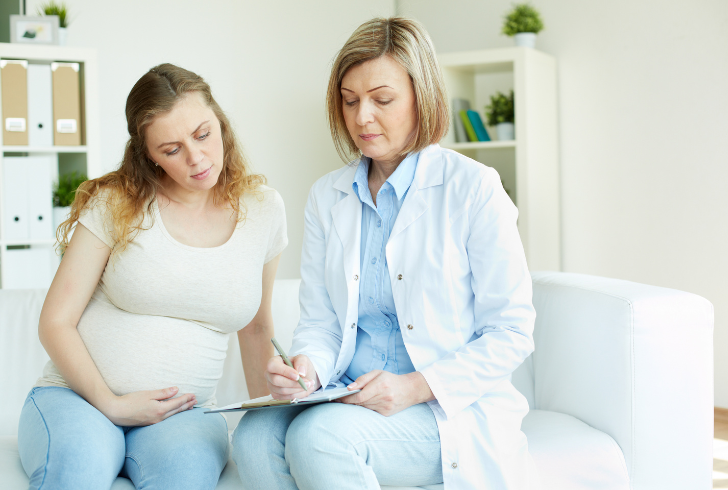
Fear often grows when uncertainty goes unanswered. Medical professionals encourage women to ask detailed questions about pregnancy, labor, delivery, pain management, recovery, and possible complications instead of relying on internet searches.
Dr. Rubi Vaughn says women who feel uncomfortable with hospitals sometimes find reassurance by touring a labor and delivery unit before giving birth. Seeing the environment ahead of time can reduce fear of the unknown and make the experience feel more familiar.
Open conversations with healthcare providers also help women understand what typically happens during childbirth, what warning signs require medical attention, and how they can advocate for themselves throughout pregnancy and delivery.
As Dr. Vaughn explains, “Knowledge is power,” especially when that knowledge comes from trusted medical professionals instead of social media speculation.
Support Systems Can Make a Difference
Professional support extends beyond doctors and nurses.
Many experts recommend working with a doula, a trained birth support professional who provides emotional, physical, and informational guidance throughout pregnancy, labor, and the postpartum period.
According to Dr. Vaughn, a doula’s role is to focus entirely on supporting the birthing person and helping create the most positive experience possible.
Research has also shown that women receiving care from doulas or midwives often report better emotional well-being and improved birth experiences. Midwives typically provide person-centered care while working closely with medical teams whenever additional treatment becomes necessary.
These support systems can reduce uncertainty and help parents feel more prepared before delivery.
Therapy Helps Many Women Process Pregnancy Fears
Mental health specialists say therapy can be valuable for anyone experiencing persistent anxiety about pregnancy, childbirth, or parenthood.
Bombardieri recommends working with therapists who specialize in perinatal mental health because they understand both the emotional and practical concerns surrounding pregnancy.
Treatment often focuses on identifying where fear originates, separating realistic risks from imagined worst-case scenarios, and developing healthier ways to approach major life decisions.
Therapy does not encourage women toward motherhood or away from it. Instead, it helps ensure that decisions reflect personal values rather than overwhelming anxiety.
Recovery After a Difficult Birth Is Possible
Some fears are rooted in personal medical experiences rather than outside influences.
Julie Masi, a 36-year-old mother from Massachusetts, experienced a healthy pregnancy with her first child but faced unexpected complications during delivery. She required an unplanned cesarean section and later developed postpartum preeclampsia, a serious but treatable condition involving high blood pressure after childbirth. The complication required several additional days in the hospital.
The experience left a lasting emotional impact. Even routine blood pressure checks after returning home triggered intense anxiety because they reminded her of the medical emergency.
When Masi and her husband later began discussing a second child, memories of the first birth immediately resurfaced. During a preconception appointment, hearing about the possibility of developing preeclampsia again brought back the same fear and panic she had experienced after delivery.
Rather than making an immediate decision, Masi began working with a therapist who helped her process the trauma surrounding her first birth.
Over time, therapy allowed her to view a future pregnancy with greater confidence while still acknowledging the uncertainty involved.
Now in the third trimester of her second pregnancy, Masi describes her emotions as a combination of excitement, nervousness, happiness, and caution. She explains, “I can’t let this hold me back from something that I really want to do.”
Her experience reflects an important point raised by mental health professionals: fear does not always disappear completely, but it can become manageable with the right support.
There Is No Single Right Choice

Experts also emphasize that choosing not to become a parent is a valid decision.
Bombardieri believes women should not feel pressured to prove courage by overcoming every fear associated with pregnancy. For some, parenthood aligns with personal goals. For others, a child-free life is the better choice.
The most important factor is making that decision from a place of clarity rather than emotional overload or constant exposure to alarming information.
Mental health professionals encourage women to give themselves space to consider what they genuinely want instead of allowing outside opinions, online discussions, or social expectations to determine the outcome.
A More Balanced Conversation Matters
Pregnancy and motherhood involve real physical, emotional, and practical challenges, but they also include experiences that are far more varied than social media often suggests. Public discussions tend to amplify frightening stories because they attract attention, leaving routine pregnancies and positive outcomes largely unseen.
Experts believe a more balanced conversation can reduce unnecessary fear without ignoring real risks. Reliable medical advice, accurate health information, emotional support, and honest discussions help women understand what to expect. This allows them to make informed decisions instead of feeling overwhelmed by anxiety.
Research continues to show that pregnancy-related fear is becoming more common. Healthcare providers, mental health professionals, and educators share the same message. Women need trustworthy information, open conversations, and support that fits their individual needs. These resources help them make confident decisions instead of relying on fear or misleading content online.