

A journey around the Moon brings more than scientific goals and spacecraft systems into focus. Inside the Orion capsule, Artemis II astronauts carry personal items that hold deep emotional value, adding a human layer to a mission built for deep space testing.
These small objects, packed within strict limits, offer comfort during a tightly confined 33-cubic-feet living space as the crew travels far from Earth.
Each astronaut receives a “personal preference kit,” designed with tight restrictions of just 5 inches by 2 inches and a maximum weight of 3.3 pounds. The purpose is simple yet meaningful—allow personal connections to travel into space, offering emotional grounding during a 10-day mission in isolation.
Personal Items That Travel Beyond Earth
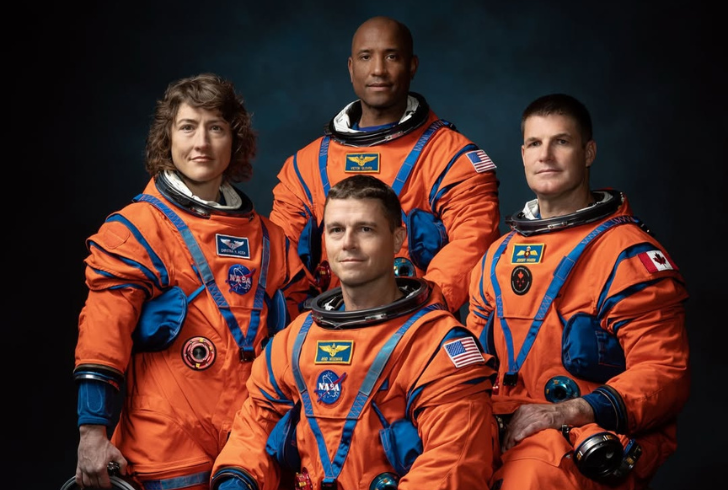
The Artemis II crew selected items that reflect family bonds, memories, and inner strength. Pilot Victor Glover, 49, a married father of four daughters, included family heirloom wedding rings along with inspirational quotes curated by Apollo 9 astronaut Rusty Schweickart, as reported by BBC News.
Mission Specialist Christina Koch, 47, who is married, chose handwritten notes from loved ones. She described them as a “tactile connection” to people back on Earth, offering a sense of closeness even in deep space.
Canadian Space Agency astronaut Jeremy Hansen, 50, a married father of three, packed a necklace featuring moon-shaped pendants engraved with “Moon and back,” along with his family’s birthstones and names. He also brought maple syrup and maple cookies outside the official kit to share with fellow crew members.
Commander Reid Wiseman, 50, a single father of two teenage daughters, carried a small notebook to write personal reflections for Ellie and Katherine. He also spoke openly about mission risks, sharing practical family preparations, including, “Here is where the will is, here’s where the trust documents are, and if anything happens to me, here’s what’s going to happen to you . . . that’s part of this life.”
Personal Keepsakes With a Long Space Legacy
The idea of carrying personal items in space dates back decades. During “Apollo 11”, astronauts also brought symbolic objects tied to history and identity.
Neil Armstrong carried a small piece of wood and fabric from the Wright Flyer, the first powered aircraft built by the Wright brothers in 1903. Michael Collins brought a U.S. flag, a District of Columbia flag, and a U.S. Air Force flag.
Buzz Aldrin participated in communion on the Moon using a special kit, marking a historic personal moment during the mission.
Artemis II Mission Details and Spacecraft Journey
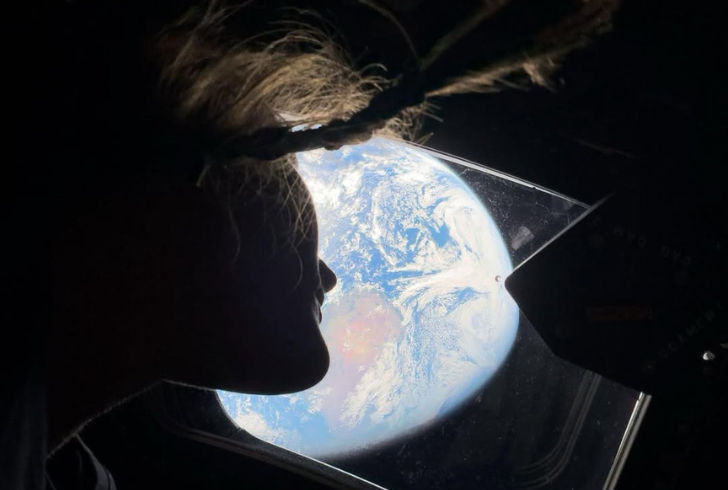
Artemis II launched from Cape Canaveral, Florida, aboard a 322-foot Space Launch System rocket at 6:35 p.m. ET. The Orion capsule began a 10-day journey aimed at lunar orbit, testing key systems needed for future deep space missions.
The mission marks the first crewed trip to the Moon’s vicinity since the Apollo program ended in 1972. Artemis II serves as a critical systems check for Orion before future landing missions are attempted.
Artemis III is expected to test docking and rendezvous systems with new lunar landers in 2027, with a planned Moon landing targeted for 2028. Looking ahead, NASA has outlined early plans for a crewed Mars mission, projected for the late 2030s or early 2040s.
Artemis II reflects a blend of engineering precision and human sentiment, where strict spacecraft limits meet deeply personal choices. The mission continues to build the path for extended lunar exploration, while each small keepsake inside Orion quietly carries a story from Earth into deep space.